
When exporting goods to international markets like Ireland, choosing the right packaging is not just a logistics decision—it directly impacts product safety, shipping costs, and customer satisfaction. Businesses that ship fragile items, machinery parts, electronics, or retail goods often struggle to decide between wooden crates and cartons. The wrong choice can lead to damaged goods, increased returns, and higher freight charges.
This in-depth,guide reveals the real cost, protection level, and performance differences between wooden crates and cartons in global shipping. If you want to reduce transit risks, improve delivery reliability, and boost buyer confidence, this buying-focused comparison will help you make the smartest packaging investment.
Why Packaging Choice Matters for International Shipping
For exporters targeting Europe and especially Ireland, packaging must withstand long transit durations, port handling, customs inspections, and final-mile delivery. Inadequate packaging can cause crushing, moisture damage, and breakage—issues that damage your brand reputation and increase operational costs.
Wooden crates and cartons shipping services are the two most common export packaging options. However, each serves a different purpose depending on shipment type, fragility, weight, and value of goods.
Secret 1: Protection Level Determines Customer Satisfaction
The biggest difference between wooden crates and cartons shipping is structural strength.
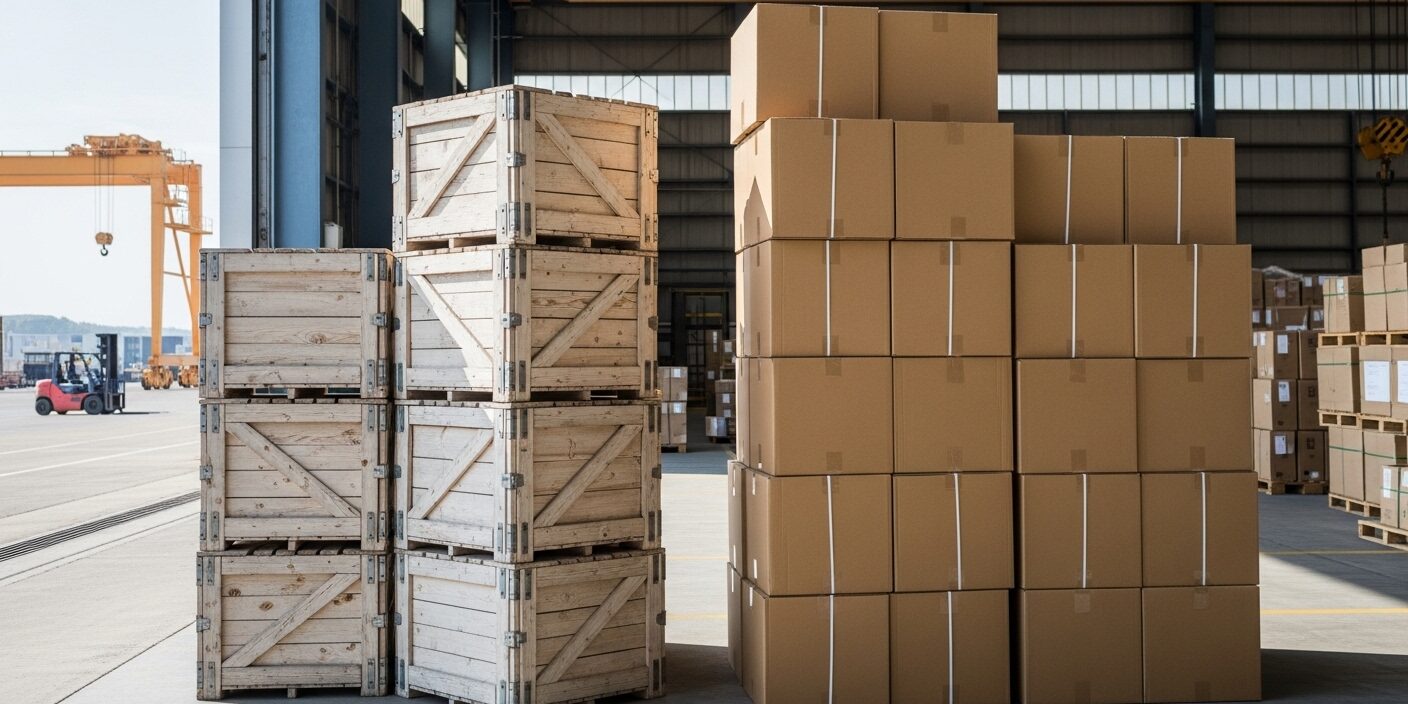
Wooden crates provide rigid protection against heavy stacking, impact, and rough handling during long sea or air freight journeys. They are ideal for high-value or delicate products such as machinery, glassware, electronics, or automotive parts.
Cartons, on the other hand, are lightweight and flexible. They are suitable for retail goods, apparel, packaged foods, and low-risk items. However, cartons may compress under pressure or get damaged if exposed to moisture or mishandling.
For exporters selling to premium European buyers, choosing wooden crates for fragile shipments signals professionalism and reliability, which builds long-term trust.
Secret 2: Shipping Cost vs Damage Risk Trade-Off
Many exporters assume cartons are always cheaper. While cartons reduce initial packaging cost and freight weight, they can increase total shipping expenses if goods are damaged in transit.
Wooden crates are heavier than Cartons shipping, but they drastically reduce the risk of breakage, insurance claims, and costly replacements. For expensive cargo, the investment in crates often results in lower long-term costs and fewer customer complaints.
For International shipments that pass through multiple ports or warehouses, stronger packaging ensures products arrive in perfect condition, improving repeat orders and brand loyalty.
Secret 3: Compliance and International Shipping Standards
European import regulations, including those followed , often require strong and compliant packaging for industrial or commercial shipments. Wooden crates can be treated and certified to meet international phytosanitary standards, ensuring smooth customs clearance.
Cartons are widely accepted for consumer goods but may not meet structural requirements for heavy equipment or bulk exports. Using proper export-grade packaging also demonstrates professionalism to international buyers and distributors.
Meeting global packaging standards enhances your brand authority and positions your business as a reliable exporter.
Secret 4: Storage, Handling & Warehouse Efficiency
Wooden crates are stackable, durable, and easy to handle with forklifts, making them ideal for large-scale B2B shipments and warehouse storage. They maintain shape even during long storage periods, reducing product movement and internal damage.
Cartons offer flexibility and easy manual handling, making them suitable for smaller shipments and eCommerce exports. However, they may require additional internal cushioning such as bubble wrap or foam inserts to ensure safety.
For exporters managing bulk orders to Ireland, crates improve handling efficiency and minimize warehouse damage risks during loading and unloading operations.

Secret 5: Brand Perception & Buyer Confidence
Packaging is not only functional—it also influences how international buyers perceive your business. High-value clients expect secure, professional packaging that reflects product quality and brand credibility.
Wooden crates communicate premium protection and reliability, making them ideal for B2B shipments and industrial exports. Cartons convey practicality and efficiency, suitable for fast-moving consumer goods and retail products.
If your goal is to build trust with European distributors and wholesalers, investing in stronger packaging can significantly enhance perceived value and customer satisfaction.
Wooden Crates vs Cartons Shipping: Which Should You Choose?
The decision ultimately depends on shipment type, product fragility, and long-term cost strategy. Wooden crates are best for heavy, fragile, or high-value items requiring maximum protection. Cartons work well for lightweight, non-fragile goods where cost efficiency and speed are priorities.
Exporters targeting Ireland’s competitive market should align packaging choice with buyer expectations, transit conditions, and brand positioning.
Frequently Asked Questions Wooden Crates Vs Cartons Shipping
Which type of packaging offers the highest level of protection for international shipments?
Wooden crates are considered the safest packaging option for international shipping because they provide superior structural protection, impact resistance, and stacking strength during long-distance transport.
Are cartons cheaper than wooden crates for export?
Cartons have lower upfront costs and reduce freight weight, but wooden crates can be more cost-effective in the long run by preventing product damage and costly replacements.
When should I use wooden crates instead of cartons?
You should use wooden crates for fragile, heavy, or high-value goods such as machinery, electronics, and glass items that require strong protection during sea or air freight shipping.
Do European buyers prefer crate packaging?
Yes, many European importers prefer crate packaging for industrial and premium goods because it ensures safety, professionalism, and compliance with international shipping standards.
Long-Term Business Benefits of Choosing the Right Packaging
Wooden Crates Vs Cartons Shipping
Selecting the right shipping packaging is a strategic business decision that impacts customer experience, operational costs, and global brand perception. Exporters who consistently deliver damage-free shipments gain higher customer retention, stronger distributor relationships, and increased repeat orders.
For businesses shipping regularly to Ireland and other European markets, optimizing packaging between wooden crates and cartons can significantly improve logistics performance and buyer trust.

Final Buying Insight Invest Smart, Ship Confidently
If your cargo is valuable, fragile, or heavy, wooden crates offer unmatched protection and professional appeal. If your shipments are lightweight and low-risk, cartons provide flexibility and cost efficiency. The key is aligning packaging choice with product type, transit duration, and buyer expectations.
Smart exporters don’t just ship products—they deliver reliability. By choosing the right packaging solution, you protect your goods, reduce losses, and create a premium experience that converts first-time buyers into long-term international clients.
Make your packaging decision strategically, and your shipments to Ireland will arrive safer, faster, and more professionally than ever before.