When exporting goods from Pakistan, businesses and individuals face a crucial decision: should they choose air freight or sea freight? This choice directly affects cost, delivery speed, cargo safety, and overall logistics efficiency. Understanding the differences between these shipping methods ensures exporters, eCommerce sellers, and personal shippers make informed decisions.
In this guide, we will explore air freight vs sea freight Pakistan, including cost comparisons, transit times, advantages, challenges, and professional tips to optimize your international shipping strategy.
Understanding Air Freight and Sea Freight
Air Freight
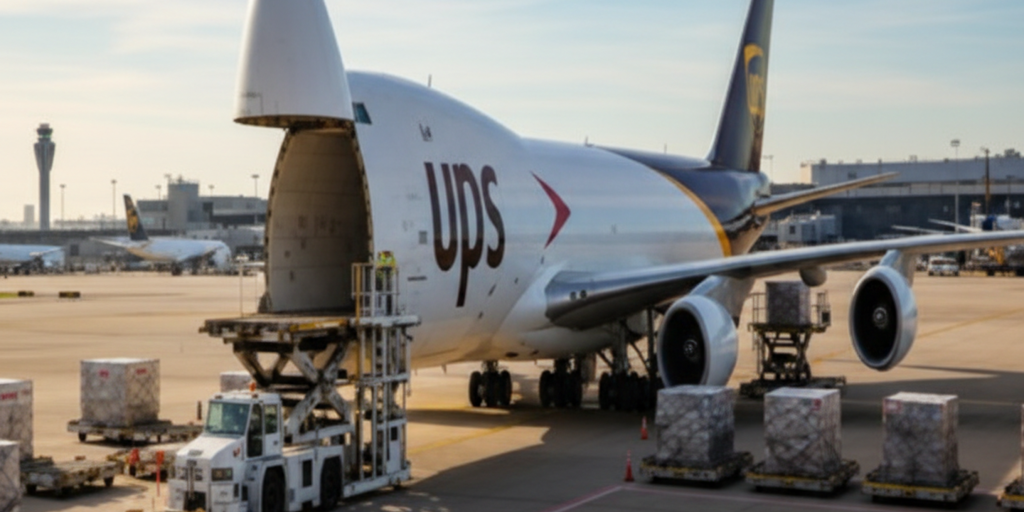
Air freight involves transporting goods via commercial airplanes or dedicated cargo flights. It is the fastest mode of international shipping, ideal for high-value, urgent, or perishable goods. Major Pakistani airports, including Karachi, Lahore, and Islamabad, handle large volumes of international air cargo, connecting businesses to global markets efficiently.
Key Features:
-
Fast transit times (typically 3–7 days for Europe and the Middle East)
-
Ideal for small-to-medium shipments
-
Higher cost per kilogram compared to sea freight
-
Limited cargo space for very large shipments
Sea Freight
Sea freight uses cargo ships to transport goods through international shipping lanes. Although slower, it is significantly more cost-effective, especially for heavy and bulk shipments. Pakistan’s main seaports, such as Karachi Port and Port Qasim, facilitate trade with Europe, the Gulf, and Asia.
Key Features:
-
Longer transit times (usually 22–35 days to Europe)
-
Economical for large volumes and heavy cargo
-
Flexible container sizes (20ft, 40ft, and refrigerated containers)
-
Slower delivery but ideal for bulk shipments
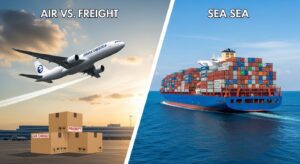
Air Freight vs Sea Freight Pakistan
Cost is often the most decisive factor when selecting a shipping method.
| Shipping Mode | Average Cost (PKR/kg) | Best For |
|---|---|---|
| Air Freight | 400–700 PKR/kg | High-value, urgent shipments |
| Sea Freight | 50–150 PKR/kg | Bulk or heavy cargo |
| Courier Services | 600–1000 PKR/kg | Small parcels & documents |
Insights:
-
Air freight is significantly more expensive but saves valuable time.
-
Sea freight reduces cost per kilogram but increases transit time.
-
Businesses often use air for urgent orders and sea for bulk inventory to balance cost and speed.
Speed and Delivery Times
Air Freight Transit Time
-
Pakistan to the UK: 4–7 days
-
Pakistan to the UAE: 2–4 days
-
Pakistan to the US: 6–10 days
Sea Freight Transit Time
-
Pakistan to the UK: 22–35 days
-
Pakistan to the UAE: 15–25 days
-
Pakistan to the US: 35–45 days
Key Takeaway: If speed is a priority, air freight is unbeatable. For cost efficiency and bulk shipments, sea freight is ideal.
Choosing the Right Option: Factors to Consider For Air Frieght & Sea Frieght
1. Cargo Type
-
Perishable items: Fruits, seafood, and pharmaceuticals require air freight for freshness.
-
Non-perishable bulk goods: Machinery, furniture, and construction materials are better suited for sea freight.
2. Shipment Size & Weight
-
Air freight is cost-effective for small-to-medium shipments.
-
Sea freight is suitable for heavy cargo, oversized items, or large container loads.
3. Budget Constraints
-
Limited budgets favor sea freight.
-
Urgent orders or high-value items justify higher air freight costs.
4. Destination & Customs Clearance
-
Air freight usually has faster customs clearance due to electronic documentation.
-
Sea freight may experience delays if documentation or inspection procedures are not properly handled.
5. Seasonal Considerations
Peak seasons such as Ramadan, Eid, Christmas, and Black Friday increase cargo volumes, which can affect shipping timelines. Planning early during these periods ensures smoother operations and avoids unexpected delays.

Advantages & Disadvantages of Air freight & Sea freight
| Shipping Mode | Advantages | Disadvantages |
|---|---|---|
| Air Freight | Fast delivery, reliable, minimal inventory time | Expensive, limited cargo size |
| Sea Freight | Cost-effective, bulk shipping, flexible container sizes | Slower delivery, seasonal delays, port congestion |
Real-Life Shipping Scenarios
-
E-commerce exports: Small electronics or fashion accessories often go via air freight to meet tight delivery schedules.
-
Industrial machinery: Large machines or equipment are shipped via sea freight to save costs despite longer transit times.
-
Perishable food products: Fruits, seafood, and pharmaceutical products rely on air freight to preserve quality.
These scenarios demonstrate that the choice between air and sea freight is not one-size-fits-all—it depends on shipment urgency, cargo type, and budget.
Tips to Optimize Air freight & Sea Freight Shipping from Pakistan
-
Plan Ahead: Avoid last-minute bookings during peak seasons.
-
Use Reliable Freight Forwarders: Professional guidance ensures proper documentation, route planning, and customs compliance.
-
Consider Hybrid Shipping: Combine air and sea for optimal cost and speed—urgent items by air, bulk shipments by sea.
-
Prepare Accurate Documentation: Commercial invoices, packing lists, and export licenses prevent delays.
-
Proper Packaging: Fragile and valuable items require secure export packing to reduce risk.
-
Track Shipments Online: Many international freight companies provide real-time tracking for peace of mind.
Frequently Asked Questions
Q1. Which is air freight & sea freight from Pakistan?
Air freight is the fastest option, typically delivering within 4–7 days for Europe and the Middle East, while sea freight can take 22–35 days.
Q2. Can sea freight be cheaper than air freight?
Yes, sea freight is significantly more cost-effective for large or heavy cargo, offering lower cost per kilogram despite longer transit times.
Q3. How do I reduce shipping delays from Pakistan?
Ensure accurate documentation, choose experienced freight forwarders, plan shipments during off-peak periods, and pack cargo securely.
Q4. Is air freight or sea freight suitable for all types of cargo?
Air freight is ideal for small-to-medium, high-value, or perishable items but not cost-effective for very large or heavy shipments.
Making the Right Choice
Both air freight and sea freight from Pakistan have their strengths and limitations. Air freight offers speed, reliability, and minimal transit risk, ideal for high-value or urgent shipments. Sea freight provides affordability and flexibility for bulk shipments but requires longer lead times.
Businesses often adopt a hybrid approach: urgent items go by air, while large shipments are sent by sea. Partnering with a trusted freight forwarder ensures professional handling, timely customs clearance, and predictable delivery times.
By understanding the nuances of air freight vs sea freight Pakistan, exporters can reduce costs, meet delivery timelines, and enhance trust with international customers. Proper planning, documentation, and packaging make the difference between a successful shipment and frustrating delays.