

Shipping overseas from Pakistan can be smooth—or stressful—depending on one thing: preparation. If you’re searching for how to pack cargo for international shipping, this guide is written for households and businesses in Islamabad and Rawalpindi who want their items to arrive safely, pass customs without delays, and avoid surprise charges.
At Zain Packers and Movers, we help customers with international cargo (air, sea, and door-to-door options). This article explains how to pack cargo for international shipping in a practical, damage-preventing way—without overcomplicating it.
Table of Contents
- Planning before you pack (documents, restrictions, and measurements)
- Cartons: choosing the right box, sealing, and protecting against moisture
- Fragile items: glass, crockery, electronics, and decor
- Pallets & crating: safer handling for bulk and commercial shipments
- Labeling: shipping marks that prevent loss and customs confusion
- Air vs sea packing differences (what changes and why)
- Quick checklist + FAQs
1) Start with a plan: how to pack cargo for international shipping without surprises
International packing is not just “wrap and box.” A solid plan protects your shipment from three common problems: breakage, customs holds, and extra fees (often due to incorrect weights/dimensions).
Before you go deeper into how to pack cargo for international shipping, gather the basics:
A. Confirm what you’re sending (and what you can’t)
- Make a simple inventory: item name, quantity, estimated value, and condition.
- Check destination rules for restricted/prohibited items (common examples: aerosols, certain batteries, perfumes/flammables, liquids, sharp tools, and food items).
- If you’re shipping household goods, clarify whether items are “used personal effects” or new.
B. Measure like a shipper (not like a homeowner)
International charges may be based on:
- Actual weight (scale weight)
- Volumetric (dimensional) weight (space your carton takes)
Write down:
- Carton dimensions (L × W × H)
- Approximate weight per carton
- Total number of cartons
C. Keep documents in mind early
Even perfect packing can be delayed if paperwork doesn’t match. Common documents include:
- Packing list (carton count + contents summary)
- Invoice (especially for commercial cargo)
- CNIC/passport copy (sometimes required for personal shipments)
- AWB (Air Waybill) for air cargo or B/L (Bill of Lading) for sea cargo
- HS codes (mainly for commercial shipments)
If you’re using door-to-door international cargo from Islamabad or Rawalpindi, your cargo company may guide you—but you’ll still save time by preparing an accurate list.
2) Cartons and box-building basics for how to pack cargo for international shipping
Cartons are the foundation of safe shipping. Weak boxes collapse, crush items, and increase damage risk during stacking, loading, and transit.
A simple rule: the safest way to approach how to pack cargo for international shipping is to treat every carton like it will be lifted, slid, stacked, and re-stacked multiple times.
A. Choose the right carton (strength matters)
- Single-wall cartons: suitable for clothes, bedding, light plastic items.
- Double-wall cartons: better for books, utensils, small appliances, and mixed household goods.
- Heavy-duty cartons: best for dense items, long routes, or sea cargo.
Avoid: reused cartons with soft corners, old tape, or moisture stains.
B. Build the base correctly (most failures start here)
- Tape the bottom seam using the H-taping method:
- One strip along the center seam
- Two strips across the edges
- Reinforce corners if the box is heavy.
C. Cushioning that actually works
Use the right material for the job:
- Bubble wrap: fragile surfaces, electronics, decor
- Foam sheets: plates, glass, framed items
- Kraft paper/air pillows: void fill (prevents movement)
- Corrugated inserts: create internal walls for stability
Tip: If items move when you shake the carton gently, add more void fill.
D. Moisture protection (important for longer routes)
For sea cargo and long transit:
- Line cartons with a plastic liner (when suitable)
- Use desiccant packs for moisture-sensitive items
- Keep cartons elevated from wet floors during packing
3) Fragile items: how to pack cargo for international shipping when it can break
Fragile shipping is about controlled impact. Your goal is to prevent item-to-item contact and absorb shock from drops or pressure.
To master how to pack cargo for international shipping for fragile goods, focus on three layers: wrap, cushion, and isolate.
A. Glassware & crockery
- Wrap each piece individually (bubble wrap or foam).
- Add padding at the bottom of the box (at least 5 cm).
- Use dividers/cell kits for glasses when possible.
- Place heavier items at the bottom; lighter on top.
- Fill empty gaps—no rattling.
B. Electronics (TVs, computers, small appliances)
- Best option: original box + molded inserts.
- If not available:
- Wrap with foam sheets (avoid direct bubble wrap on glossy screens unless protected)
- Double-box (inner box + outer box with cushioning gap)
- Remove detachable parts (stands, cables) and pack separately in the same carton with padding.
C. Decor, frames, mirrors
- Protect corners with foam/corner guards.
- Wrap the full surface, then add a rigid layer (corrugated sheet).
- Consider custom crating for high-value, oversized, or easily cracked items.
D. Liquids, perfumes, and items with restrictions
Many air routes restrict liquids/aerosols/flammables. If allowed:
- Seal caps with tape
- Use leak-proof bags
- Pack upright with absorbent material
If unsure, ask your cargo provider before packing to avoid last-minute removal. 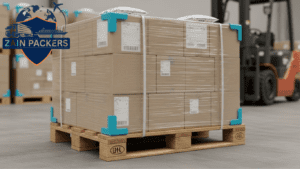
4) Pallets and crating: how to pack cargo for international shipping at scale
When you have multiple cartons, heavy weight, or commercial cargo, palletizing reduces handling damage and speeds loading/unloading.
If your shipment is commercial, how to pack cargo for international shipping often means thinking like a warehouse: stable stacks, uniform dimensions, and secure wrapping.
A. When palletizing is the smart choice
- Many cartons going to one consignee
- Bulk household goods or mixed items
- Commercial cargo shipping that needs forklift handling
- Long-distance sea freight where stacking pressure is high
B. Pallet rules that prevent damage
- No carton overhang (boxes should sit within pallet edges)
- Heavier cartons at the bottom
- Keep the stack square and level
- Use:
- Stretch wrap (multiple layers)
- Straps/banding for added security
- Corner boards to prevent strap crushing
C. Don’t ignore compliance: ISPM-15
Many destinations require ISPM-15 heat-treated wooden pallets/crates to prevent pests. If your pallet/crate isn’t compliant, customs can reject or delay the shipment.
D. Crating (for premium protection)
Crates work best for:
- Delicate machinery parts
- High-value fragile items
- Artwork, mirrors, marble/ceramics
- Anything that can’t handle stacking pressure
5) Labeling that works: the overlooked part of how to pack cargo for international shipping
Strong packing can still fail if cartons are mislabeled, mixed up, or can’t be identified when the outer surface scuffs.
The most overlooked part of how to pack cargo for international shipping is creating labels that survive handling and match your paperwork.
A. What every carton label should include
- Shipper name + phone
- Consignee name + phone
- Destination city + country
- Carton count format (example: 3/12)
- Optional: brief contents category (e.g., “Kitchen items”)
B. Where to place labels
- Put labels on two adjacent sides (not only the top)
- Use waterproof labels or cover with clear tape (don’t cover barcodes if provided)
C. Handling marks (use only when true)
- FRAGILE
- THIS SIDE UP
- KEEP DRY
- DO NOT STACK (only if necessary and permitted)
D. Make labels match the packing list
Customs and carriers trust consistency. If your packing list says 10 cartons, your labels should clearly show 1/10 through 10/10.
6) Air vs sea: how to pack cargo for international shipping for each mode
Air cargo and sea cargo both move internationally, but the risks differ—so packing should differ too.
Understanding how to pack cargo for international shipping by mode helps you avoid damage and reduce unnecessary costs.
Air cargo (faster, but weight/volume sensitive)
Packing priorities:
- Lightweight protection (don’t overbuild if it increases volumetric weight)
- Strong corners and crush resistance
- Clear labeling and clean outer cartons for scanning
- Compliance for batteries, liquids, cosmetics, and electronics
Sea cargo (longer, moisture and pressure risks)
Packing priorities:
- Moisture control (liners, desiccants where appropriate)
- Stronger cartons or crates
- Better sealing and reinforcement
- Palletizing for stable stacking and reduced carton crushing
If you’re not sure whether air cargo services from Islamabad/Rawalpindi or international sea cargo from Pakistan fits your shipment, choose based on urgency, item sensitivity, and budget—then pack for that route.
Quick packing checklist (save this)
- Inventory list prepared + photos of valuable items
- Correct cartons (double-wall for heavy/mixed items)
- Bottom sealed with H-tape; cartons not overloaded
- Fragile items wrapped individually + gaps filled
- Electronics protected + double-boxed if needed
- Pallets stable, wrapped, strapped; ISPM-15 if required
- Labels on two sides + carton numbering (1/10 etc.)
- Packing list matches labels exactly
FAQs
Do you provide packing and door-to-door international cargo from Islamabad and Rawalpindi?
Yes—Zain Packers and Movers can arrange packing, pickup, and shipping support depending on route and shipment type. If you want professional help with how to pack cargo for international shipping, share your item list and destination so the packing method matches the mode (air/sea) and customs requirements.
What usually causes damage in international cargo?
Most damage comes from: weak cartons, empty space inside boxes, no double-boxing for fragile goods, poor pallet wrapping, and unclear labels.
How can I reduce international cargo cost without compromising safety?
Use right-sized cartons, avoid unnecessary outer volume, palletize smartly for bulk, and keep weights balanced. Accurate measurements also prevent pricing surprises.
Conclusion
Safe overseas delivery is rarely about luck—it’s about method. Strong cartons, proper cushioning, pallet stability, moisture protection, and clear labels work together to prevent damage and delays. If you follow the steps above, you’ll be in a much better position to control cost, protect your items, and clear customs smoothly.
If you still have questions about how to pack cargo for international shipping (or want Zain Packers and Movers to handle packing and shipping from Islamabad/Rawalpindi), send your destination country, item type (household or commercial), and approximate carton count for a practical recommendation and quote.